What to keep in mind
- Prepare a specific example and know what you want to discuss.
- Explain your concern clearly, then give the other person time to answer.
- Agree on a practical next step you both understand.
You have probably rehearsed a difficult conversation in your head before.
You think about what you should say. Then you imagine how the other person might react. By the time you have considered a few possible responses, putting it off starts to feel easier.
Perhaps a team member keeps missing a deadline. A colleague interrupts you in meetings. Or a client expects work that was never included in the agreed scope.
Whatever the situation, you need a way to raise the concern without losing sight of what you want to achieve.
Preparing for difficult conversations at work can help you explain yourself clearly, understand the other person’s perspective and decide what happens next.
Before you begin
Take a few minutes to answer three questions:
- What exactly do I need to discuss?
- Why does it matter to me?
- What would I like us to understand or agree on?
You do not need to predict every response. Start by getting clear about your own purpose.
Be specific about what happened
When you are frustrated, it is easy to describe someone’s behaviour in broad terms.
“You never help.”
“You’re always late.”
“You don’t listen to me.”
The other person may immediately think of an occasion when they did help, arrived on time or listened. You can end up arguing about your choice of words before you reach the concern.
Choose a specific example instead.
At work, you might say:
“I received the last two reports after the agreed deadline, so I had to move the review meetings.”
With a colleague:
“I completed the last three handovers without the supporting notes. I had to delay the client update while I checked the details.”
These openings give you something concrete to discuss. They also help you avoid making claims about someone’s character or intentions.
Before the conversation, check that your example is accurate. If you are unsure about a detail, ask about it rather than presenting it as a fact.
Decide what you want from the conversation
You might want an explanation, a change in behaviour or a clearer agreement.
Knowing which one you need will help you stay focused.
If your colleague has missed a deadline, do you need to understand what caused the delay? Do you need earlier notice next time? Perhaps you need both.
If you are discussing team responsibilities, which tasks need a clear owner, deadline or handover?
Prepare your ideas, but leave room for the other person to contribute. You may hear something that changes how you understand the situation.
Try to deal with one concern at a time. If you bring up every frustration you have been storing, the conversation can become difficult to follow.
Choose a time when you can both pay attention
You are unlikely to have a useful discussion while someone is rushing out the door or trying to finish another task.
At work, ask for a private meeting. Give the person enough information to understand what you want to discuss.
“Could we set aside some time this afternoon to talk about the project deadlines?”
With a client, you could say:
“Could we review the new requests before the next project stage? I’d like us to agree on priorities and what fits the current scope.”
You may never find a perfect moment. Look for a reasonable opportunity when you have privacy and enough time to listen.
If the issue needs urgent attention, explain why you need to discuss it sooner.
Find an opening that sounds like you
You do not need to memorise a script.
A useful opening tells the person what you have noticed, why it matters and what you would like to discuss.
For example:
“When the project updates arrive late, I have less time to check them before the client meeting. What’s making the deadline difficult to meet?”
Or:
“Three urgent requests arrived after we confirmed the schedule. They affect the delivery date. Could we review the priorities and agree on a realistic plan?”
Use words you would normally say. If your opening sounds too formal when you read it aloud, simplify it.
You can be respectful and still state the concern plainly. If you soften your message so much that the issue disappears, the other person may not understand what you need.
Give the other person time to answer
Once you have raised the concern, pause.
You may feel tempted to keep explaining, especially if the silence feels uncomfortable. Give the person a chance to think and respond.
Ask questions that help you understand:
- “How do you see it?”
- “What happened from your point of view?”
- “What would help us work through this?”
If their answer surprises you, check that you have understood.
“Have I got this right? You thought someone else was responsible for sending the update?”
You do not have to agree with their explanation. You do need to understand it before deciding how to respond.
If you disagree, explain which part you see differently. Keep returning to the concern you came to discuss.
If the conversation becomes tense, slow down
You can choose your words carefully and still receive an upset or defensive response.
When that happens, try to avoid matching the other person’s volume or interrupting to correct every point.
You might say:
“I’d like to hear what you’re saying. Let’s take this one point at a time.”
If you are becoming too upset to continue calmly, ask for a break and agree on when you will return.
“I need a few minutes to settle my thoughts. Can we return to this at two this afternoon?”
At work, follow your organisation’s procedures if the concern involves a formal process, bullying, harassment or another serious matter. You may need support from HR or your manager.
If a workplace conversation becomes threatening, end the discussion and seek help through the appropriate workplace process.
Finish with an agreement you both understand
Before you finish, ask:
“What are we going to do next?”
Try to make the answer specific.
At work, “Keep me updated” could become:
“Please let me know by Wednesday afternoon if anything could delay Thursday’s report.”
For a team handover, “Keep everyone informed” could become:
“Please update the handover log before your shift finishes and flag any unresolved client issue to the incoming team leader.”
Check that the agreement is realistic for both of you. Decide when you will review it, particularly if you are trying a new arrangement.
For workplace matters, record the agreement where appropriate.
Common questions about difficult conversations
How do I start a difficult conversation?
Choose one specific concern. Describe what happened, explain how it affected you or the situation, and invite the other person to respond. Preparing your first sentence can help you get started.
What if the other person says I am overreacting?
Ask which part they see differently, then return to your example. You can acknowledge that you have different views while explaining why the concern matters to you and what you would like to change.
What if we cannot agree?
Identify what you do agree on and what remains unresolved. You may need more information, time to consider the options or help from an appropriate person. Be clear about the next step rather than assuming the matter is settled.
Does this approach apply to every workplace issue?
Use these preparation habits for everyday workplace concerns. Formal performance matters, complaints and serious conduct issues may require a defined process and support from the person responsible in your organisation.
Start with the conversation you need to have
Think about one concern you have been putting off.
Write down a specific example, what you want to discuss and a question you could ask. Read your opening aloud. Does it sound like you? Will the other person understand what you mean?
That small amount of preparation gives you somewhere to begin.
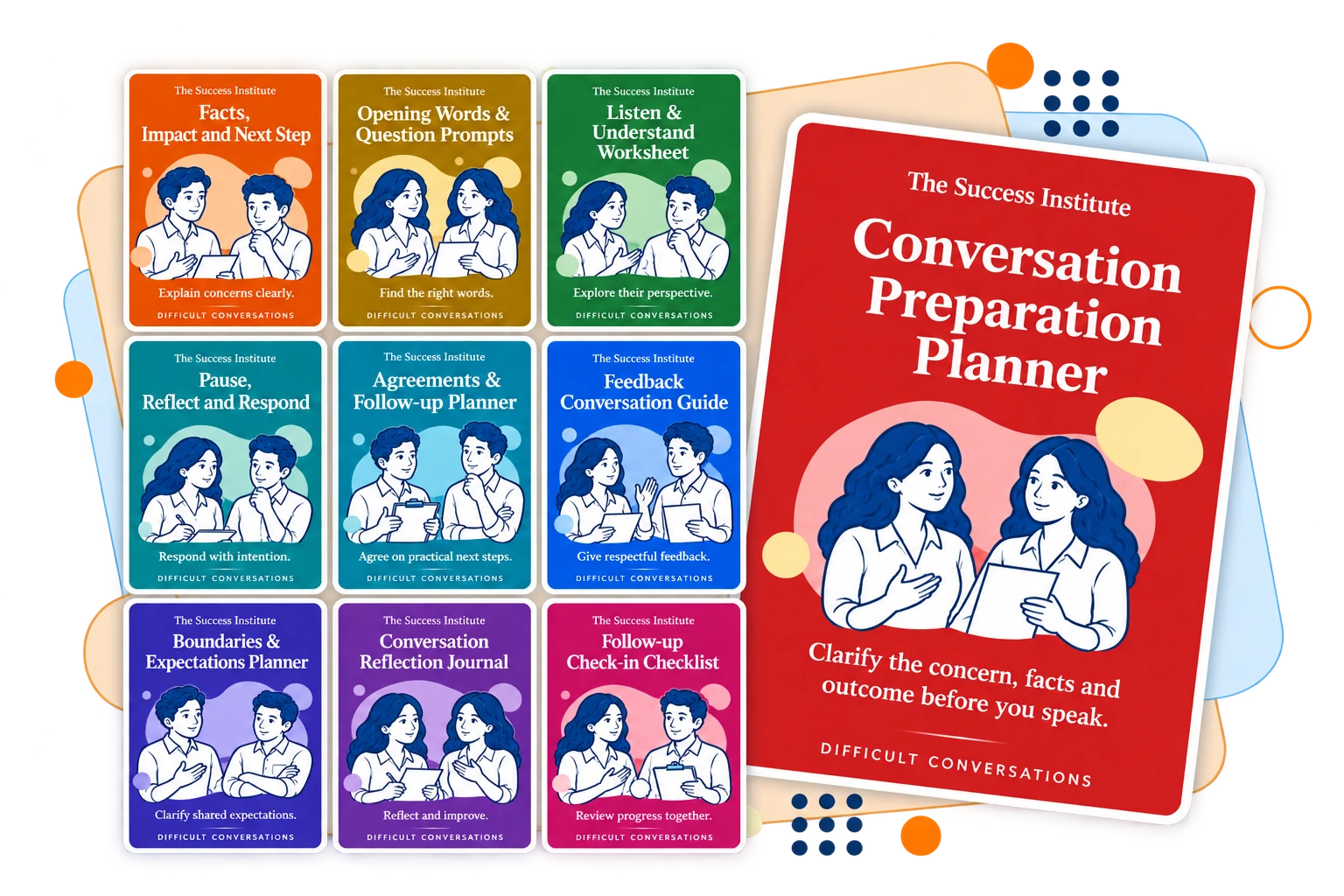
If you would like help organising your thoughts, Clear Conversations Toolkit includes practical planners, guides and prompts for difficult workplace conversations.
Explore the toolkit or start with the free Conversation Preparation Checklist to prepare for your next conversation.
A brief application outside work
The same preparation can help with an occasional personal conversation. If a shared arrangement is not working, describe one recent example, explain its effect and ask for the other person’s view. You might say: “We changed our plans twice without checking with each other. Could we agree to confirm changes before making a commitment?” Keep the language natural to the relationship. At home, you are discussing a shared arrangement rather than setting a workplace performance expectation. Finish by checking that both people understand the next step and when you will revisit it. If the other person understood the arrangement differently, make time to hear that before proposing a solution. Choose a change that each person can realistically maintain. You do not need to resolve every personal concern in one discussion; one clear agreement can give you a useful place to begin and review what happens next.
About The Success Institute
Practical communication and management resources for Australian managers, teams and professionals.
Meet Paul Puckridge →